

How VTubers Are Building Multi-Platform Empires
Virtual creators are no longer defined by a single channel or a live broadcast. A new generation of VTubers is assembling layered income models, cross-platform audiences, and durable personal brands, treating streaming as a launchpad, not a ceiling.
April 2026· Creator Economy
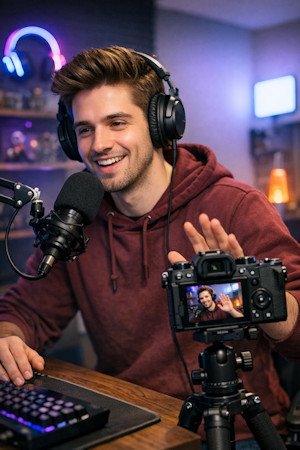
A few years ago, the VTuber model looked deceptively simple: pick an avatar, go live, collect donations and subscriptions. That picture has become almost quaint. Today’s virtual creators navigate a layered revenue ecosystem that rivals the complexity of any mid-size media operation and the smartest among them are treating their VTuber identity less as a streaming channel and more as a franchise.
The end of streaming as the only income layer
For most of VTubing’s early history, platforms like YouTube and Twitch were both stage and paycheck. Superchats, channel memberships, and bits represented the bulk of direct creator income. That’s still true for many, but it’s no longer the whole story.
Memberships have matured from simple subscription tiers into genuine content programs. Top creators offer exclusive watchalongs, early access to original music, behind-the-scenes dev logs, and community-only streams, content distinct enough that members feel they’re accessing a separate product, not just paying for the privilege of a colored name in chat. This includes: Memberships, tiered access with exclusive content beyond the public stream, sponsorships, brand deals calibrated to audience demographics, not raw view counts, digital merch, wallpapers, emote packs, virtual items, and avatar accessories, Voice packs, Recorded audio sold as ringtones, alarm sets, or navigation voices and Collabs & IP.
Also includes revenue from cross-creator projects, music features, and licensed assets
Sponsorships have also evolved. Brands once treated VTubers as a niche quirk; now they actively seek them out, particularly for campaigns targeting gaming, tech, and anime-adjacent audiences. The pitch to sponsors has shifted from “reach” to “community trust”, a VTuber with a deeply engaged audience of 80,000 can command rates that dwarf those of a disengaged influencer with ten times the following.
“Voice packs turn a creator’s most intimate asset, their voice, into a recurring revenue product that sells while they sleep.”
Digital merchandise has become one of the more creative revenue frontiers. Unlike physical merch, which demands supply chain management and upfront capital, digital products: wallpapers, emote packs, avatar accessories, themed sound effects have near-zero marginal cost. Voice packs have emerged as a particularly distinctive category: recorded audio sold as ringtones, custom alarm sets, GPS navigation voices, and character-specific audio reactions. They monetize the element that often defines a VTuber’s identity most powerfully their voice, and they sell indefinitely with no inventory concerns.
The personal brand pivot
Perhaps the more significant shift is conceptual rather than financial. A growing cohort of VTubers no longer thinks of themselves primarily as streamers who happen to have an avatar. They think of themselves as content brands that use live streaming as one distribution channel among several.
Short-form video has become a natural complement. Clips optimized for YouTube Shorts, TikTok, and Instagram Reels serve a different function than the streams themselves, they’re discovery tools, pulling in audiences who would never sit through a four-hour live broadcast but might follow after seeing a thirty-second highlight. Many VTubers now have dedicated clip editors, treating short-form as its own content pillar rather than a secondary by-product.
Podcasts have found a natural home in VTubing, too. Several creators have launched audio-first shows, sometimes in-character, sometimes stepping partially out of the avatar to discuss creator culture, industry news, or gaming, that develop an audience separate from their streaming fans. The format suits VTubers particularly well: strong vocal performance has always been central to the craft, and a podcast requires minimal additional production infrastructure.
Collaborative projects, joint music releases, creative writing anthologies, multi-creator event streams, serve both audience and business purposes. They introduce each creator’s fanbase to the others, spread production costs, and generate content that neither participant could have made alone. Some of the most-viewed VTuber content of the past two years has come from these collaborations rather than from solo broadcasts.
What this means for the industry
The implications ripple outward. Talent agencies like Hololive Production and Nijisanji recognized early that VTubers were more than streaming talent, building infrastructure for music production, merchandise licensing, and live events. Independent creators who once had to manage all of this alone are increasingly turning to boutique management firms and creator-services companies that specialize in this multi-format approach.
Platforms are adjusting too. The calculus for a creator choosing where to build an audience now includes not just monetization tools during streams, but support for podcasts, short clips, digital storefronts, and community spaces. No single platform offers all of it yet, which is precisely why multi-platform presence has become standard practice rather than an exception.
The VTuber who streams exclusively on one platform, sells only through that platform’s built-in tools, and posts nowhere else is increasingly the exception. The model that’s winning, financially and in terms of long-term durability, is one where the avatar is the anchor of an identity that reaches across formats, platforms, and revenue types. The stream is still the heartbeat. But it’s no longer the whole body.